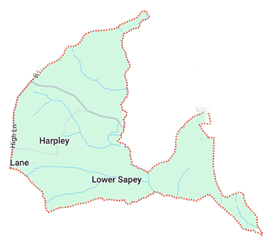
St. Bartholomew’s Church, Harpley
Introduction
St Bartholomew’s Church at Harpley was built in 1877 to replace the earlier medieval parish church at Lower Sapey. A priest is recorded in the parish in Domesday Book (1086), demonstrating the long continuity of Christian worship in the area. The present church remains the active parish church serving the rural community of Lower Sapey.
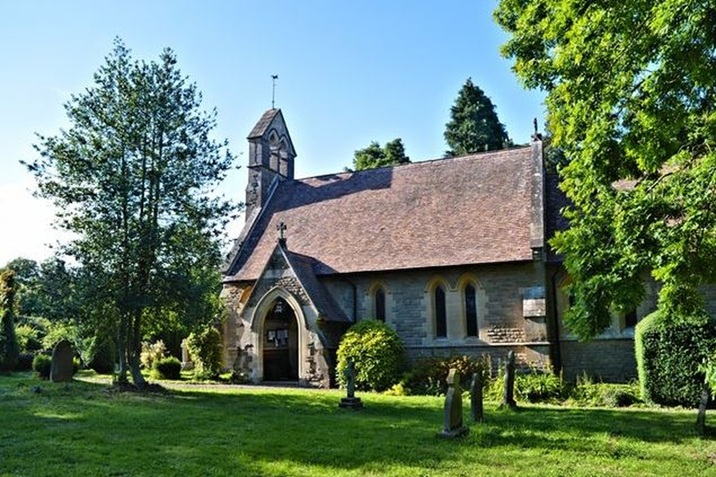
Architect and Building (1877)
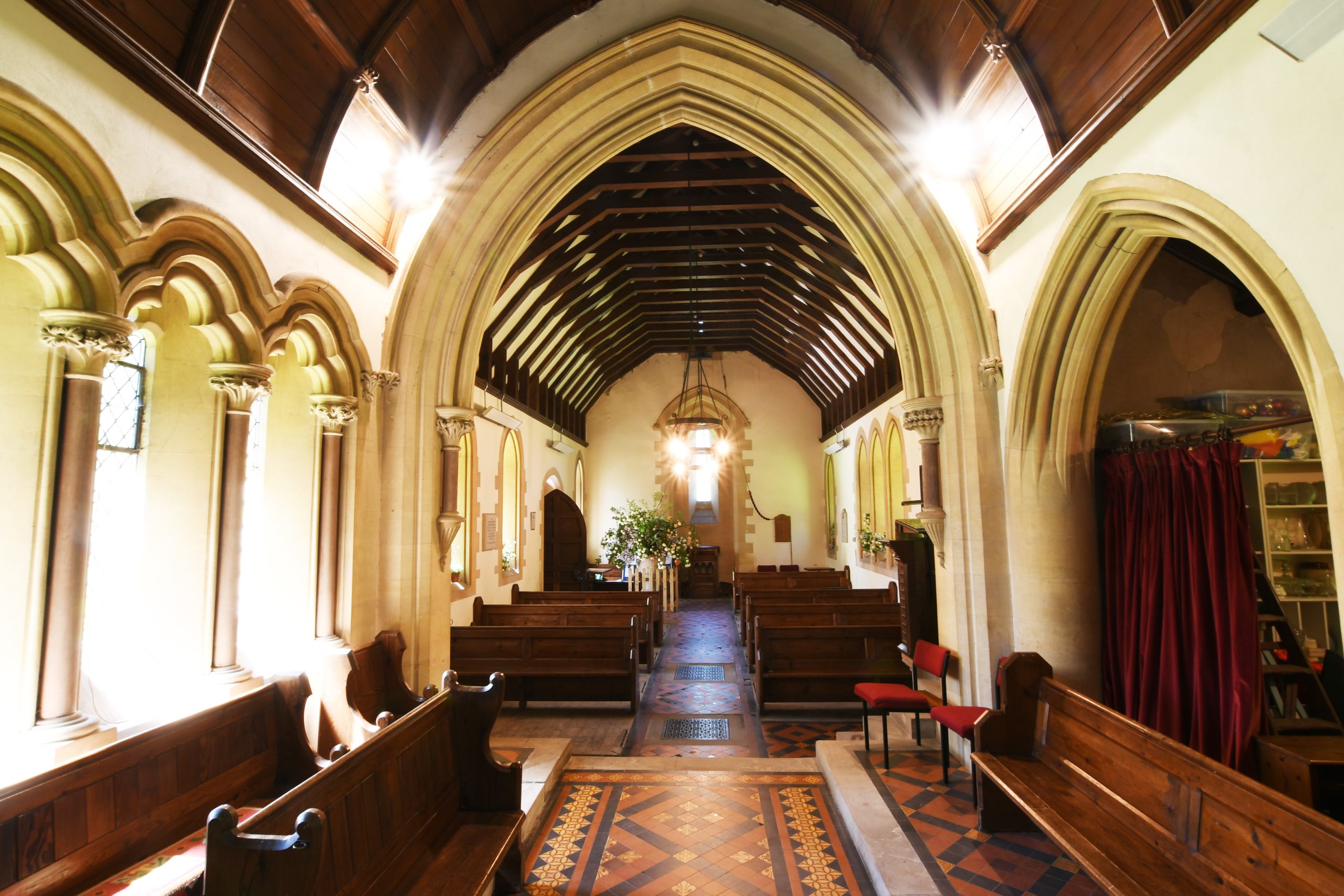
The church was designed by Frederick R. Kempson of Hereford in a restrained Early English Gothic Revival style typical of rural Victorian parish churches. It is constructed of local rubble stone with ashlar dressings and a tiled roof. The plan consists of a nave, chancel, north vestry, south porch, and a west bell‑cote containing two bells. The church is Grade II listed.
Transfer of Fittings from the Earlier Church
When the new church was constructed, several important furnishings were transferred from the earlier parish church (now known as Old St Bartholomew’s Church). These included:
• the Norman font
• the bells
• the communion table and plate
• a linenfold cupboard
These objects preserved continuity between the medieval and Victorian phases of parish worship.
The Norman Font
The early Norman font, dating from the 12th century, is the oldest surviving object associated with worship in the parish. Its transfer symbolises the continuity of baptismal ministry from the medieval church to the present building.
The East Window (1920)
The east window, installed in 1920, depicts the Nativity. Unusually, the three Magi are represented as two men and one woman. This distinctive feature makes the window particularly noteworthy among Worcestershire parish churches and reflects imaginative theological interpretation in early twentieth‑century stained glass.
Churchyard#
Following construction of the new church in 1877, the churchyard at Harpley became the principal burial ground for the parish. It contains mature specimen trees dating from the church’s early years and reflects the shift of the parish centre from the earlier Lower Sapey church site to Harpley.
Conclusion
Together with the preserved Old St Bartholomew’s Church nearby, the present church at Harpley represents the continuing story of parish worship from the Norman period to the present day.
A notable and unusual feature of the east window at St Bartholomew’s Church, Harpley is the inclusion of a female Magus within the Nativity scene. Installed c.1920 as part of the church’s stained-glass programme (traditionally associated with John Hardman & Co.), the window depicts the visit of the three wise visitors to the Christ Child—here represented as two men and one woman, an interpretation described as unusually forward-thinking for its time.
In Western Christian art the Magi are almost always shown as male kings, so the presence of a female figure is exceptional in parish church glazing of the early twentieth century. At Harpley she stands alongside the other Magi in the act of adoration before the Child and the Virgin Mary, reinforcing the idea that the Nativity represents a message for all humanity rather than a single group. The figure also reflects broader developments in inter-war memorial stained glass, where artists and patrons occasionally explored more inclusive symbolic representations following the social changes of the early twentieth century.
Artistically, the female Magus is integrated into the composition in the characteristic Hardman studio manner, with flowing drapery, strong colour contrasts, and placement within a Gothic-style architectural setting. Her inclusion makes the Harpley east window a distinctive example of evolving iconography in Worcestershire parish stained glass of the 1920s